
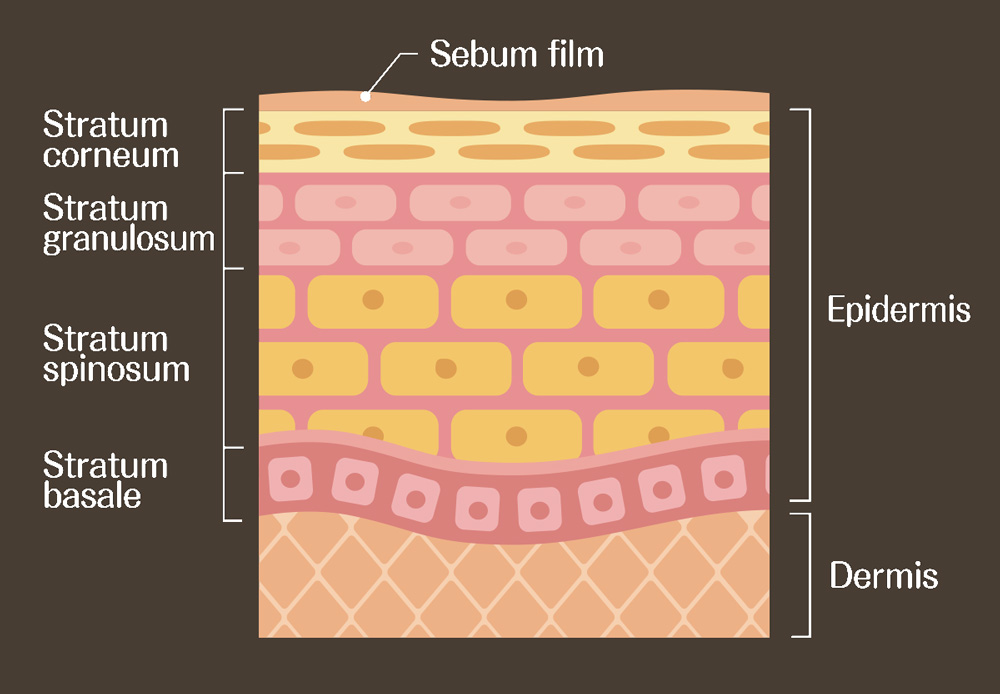
Your dog’s skin is much more than the surface underneath the coat. It is a living, protective organ that helps defend the body from the outside world.
The skin is made up of several layers. The outer layer is called the epidermis.
At the very surface of the epidermis is the stratum corneum. This is the part we are mainly referring to when we talk about the skin barrier.
Think of the Skin Barrier Like a Brick Wall
A simple way to understand the skin barrier is to picture a brick wall.
The flattened skin cells at the surface, called corneocytes, are the bricks.
The natural fats, or lipids, surrounding those cells act like the mortar holding the wall together.
These lipids include ceramides, cholesterol and fatty acids. Their role is to help keep the skin cells properly joined and the protective barrier strong.
When the bricks and mortar are healthy and well organised, the skin is better able to:
- keep water within the epidermis
- protect against environmental irritants and allergens
- limit the entry of unwanted microorganisms
- remain soft, flexible and resilient
- support normal skin renewal
The skin barrier is not simply a covering. It is an active protective system that is constantly renewing itself.
What Happens When the Barrier Is Damaged?
When the corneocytes or the lipids surrounding them become damaged or depleted, small gaps can develop in the protective wall.
Water then escapes from the epidermis more easily. This is known as transepidermal water loss, which simply means water is being lost through the skin.
As the skin loses water, it may become:
- dry or flaky
- tight or sensitive
- rough or less flexible
- greasy in some areas
- more vulnerable to irritation
- less able to protect itself effectively
The skin barrier may be affected by allergies, inflammation, bacterial or yeast imbalance, parasites, repeated licking or scratching, age, genetics and underlying health conditions.
It may also be disrupted by frequent washing with unsuitable products, excessive heat, friction or cleansing that removes too much of the skin’s natural protective oils.
Often, several factors are involved at the same time.
Supporting the Skin Barrier
Veterinary assessment is important when a dog has persistent redness, sores, hair loss, infection, discomfort or recurring skin concerns.
Professional skin and coat therapy does not diagnose or treat the underlying medical condition.
Our role is to support the surface of the skin by:
- cleansing without unnecessarily stripping the epidermis
- removing accumulated debris and excess oils
- restoring water to the stratum corneum
- conditioning the skin and coat
- supporting the natural lipid layer
- helping reduce further water loss
- creating a healthier surface environment
Because the epidermis is continuously renewing itself, rebuilding a weakened skin barrier usually takes time and consistent care.
One bath may make the coat look or feel better, but meaningful improvement in the skin barrier requires the right balance of cleansing, hydration and moisturisation.
This brings us to an important distinction:
Hydration puts water back into the skin. Moisturisation helps keep it there.